Цитата: "Dato Mikeladze"double struck. very common error
best
D
question: if it is a double strike, what about the rest of the coin?
If you mean why there are not doubled all details of the reverse, - I think its not a rule. Probably another struck was more weak then first. Or there was something under coin in the moment of the struck. who knows.. Anyway, - Im far to think that it is "doubled die" . Its impossible I guess. At leasst, much less chance then usual double struck.
best
D
This looks like machine or "shelf" or ejection doubling. With a doubled die, there is separation (however small) in some of the serifs, and I do not see any separation. The lower lettering is flat on top (why is sometimes called "shelf doubling"), because the metal was shifted in the process of ejecting the coin from the die.
A good example of a doubled die is the Cyprus 1 pound 1976 refugee issue. Every one of the copper-nickel version that I have seen is doubled in the lettering beneath the denomination. Another good example is on many of the Paraguay 1 centimo 1950. About 10-25% of them that I have seen have clear doubling (or tripling, in some cases) on the O in CENTIMO.
Цитата: "halfdisme"This looks like machine or "shelf" or ejection doubling. With a doubled die, there is separation (however small) in some of the serifs, and I do not see any separation. The lower lettering is flat on top (why is sometimes called "shelf doubling"), because the metal was shifted in the process of ejecting the coin from the die.
A good example of a doubled die is the Cyprus 1 pound 1976 refugee issue. Every one of the copper-nickel version that I have seen is doubled in the lettering beneath the denomination. Another good example is on many of the Paraguay 1 centimo 1950. About 10-25% of them that I have seen have clear doubling (or tripling, in some cases) on the O in CENTIMO.
Thanks! I suspected machine doubling but wanted to know for sure.
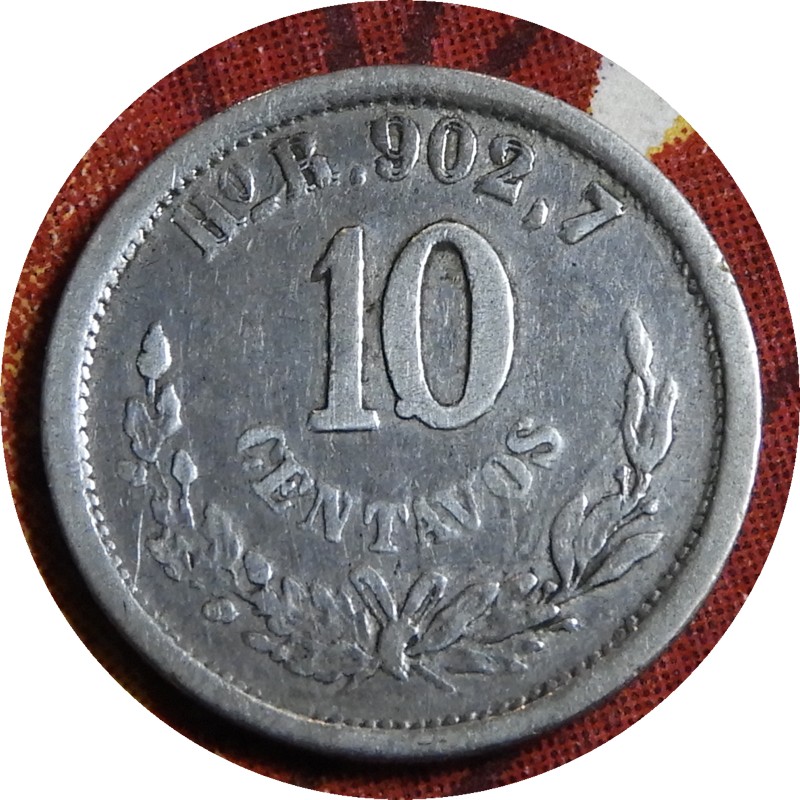
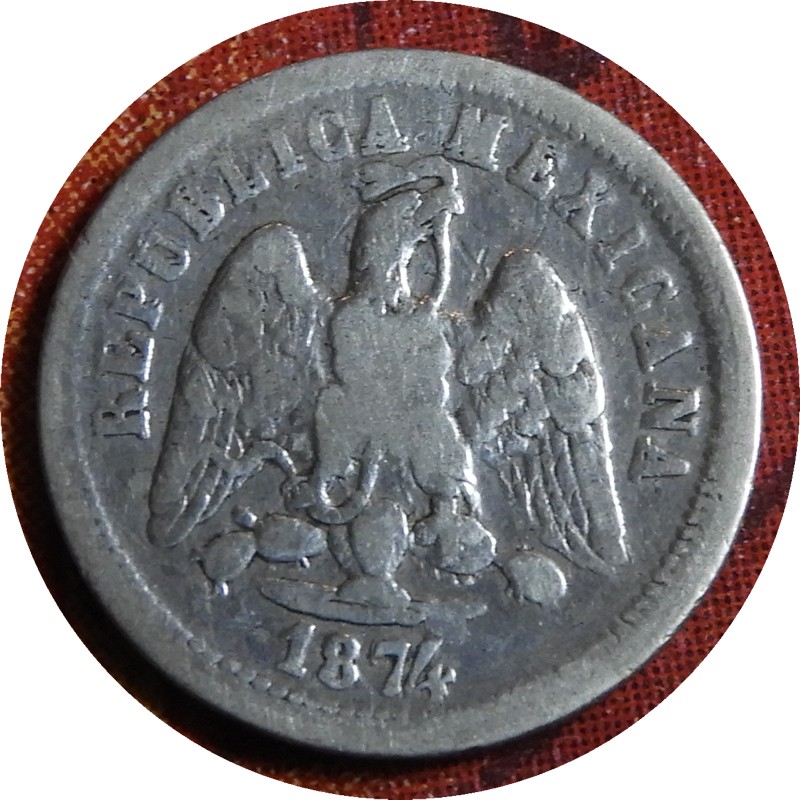
I found a Mexico 10 centavos 1874 HoR that clearly shows what I was explaining about the separation of the seraphs or the ends of characters. Look particularly at the base of the 2 in the fineness (902,7):
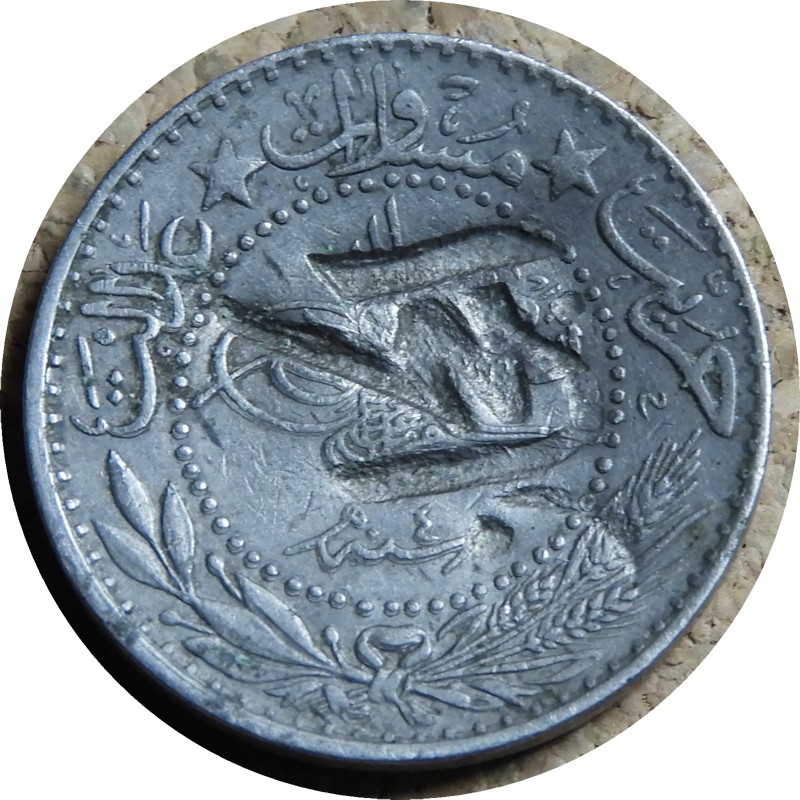
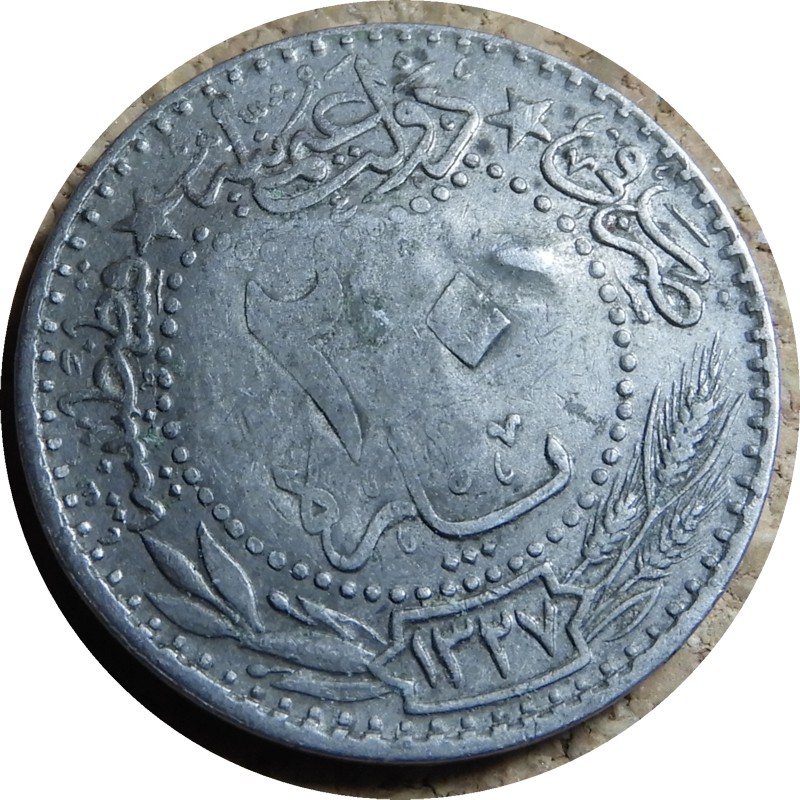
I have been looking for photos of a good example of machine / ejection / or "shelf" doubling, which are caused when the coin is not directly ejected from the dies. The Turkish 20 para host coin of this Hejaz counterstamp shows shelf doubling in several places on the obverse.